

In today’s fast-paced digital world, multimedia arts education isn’t just an option; it’s a necessity. Imagine a place where creativity meets technology, where aspiring artists learn to wield tools that can turn their wildest ideas into stunning visual realities. Whether it’s graphic design, animation, or video production, multimedia arts education opens doors to endless possibilities.
Overview of Multimedia Arts Education
Multimedia arts education equips students with essential skills for today’s creative industries. Programs incorporate disciplines such as graphic design, animation, and video production. Students engage with various technology and tools, enabling them to express their artistic visions effectively.
Curriculums typically include hands-on experiences, fostering collaboration between peers. Many institutions emphasize project-based learning, allowing students to create portfolios showcasing their work. This practical approach enhances understanding and prepares students for real-world applications.
Courses often cover design principles, software proficiency, and storytelling techniques. Educators encourage exploration, helping students develop unique styles and voices. By integrating theory and practice, programs support both technical skills and creative thinking.
Instructors often come from diverse professional backgrounds, providing insights into industry standards and expectations. Networking opportunities arise through collaborations with local artists and organizations. Participating in workshops, students gain exposure to emerging trends and tools in multimedia arts.
Additionally, access to state-of-the-art facilities and equipment supports hands-on learning. Many schools invest in updated software and hardware to reflect current industry practices. Engaging with these resources enhances students’ learning experiences.
Emphasis on interdisciplinary approaches allows students to connect multimedia arts with fields like marketing and education. Flexibility in course selection enables learners to tailor their studies to specific interests. As a result, multimedia arts education fosters well-rounded artists capable of adapting to changing industry demands.
Importance of Multimedia Arts Education
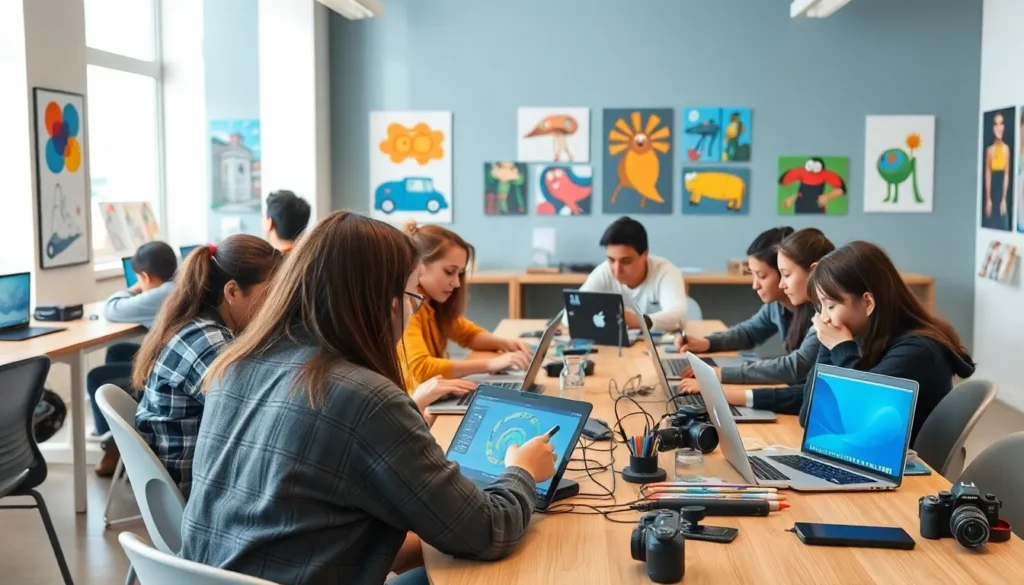
Multimedia arts education plays a crucial role in fostering creativity and innovation in aspiring artists. It prepares them to navigate the modern digital landscape effectively.
Skill Development
Students acquire a diverse range of skills through multimedia arts education. Design principles form the foundation for visual communication. Software proficiency in tools like Adobe Creative Suite enhances their technical capabilities. Storytelling techniques elevate their ability to connect with audiences. Critical thinking and problem-solving are also emphasized in project-based learning. Each course fosters collaboration with peers and professionals, enhancing teamwork skills necessary in creative industries. Exposure to real-world challenges further refines their creative processes. As students build portfolios, they showcase their unique styles and abilities, reflecting the culmination of their educational experiences.
Career Opportunities
Numerous career paths open for graduates of multimedia arts education. Fields like graphic design, animation, and video production offer a wealth of options. Positions in marketing and advertising increasingly require multimedia skills. Digital content creation has surged, leading to demand for skilled professionals. Employment opportunities exist at agencies, studios, and independent freelancing. Networking gained through collaborations with local artists enhances job prospects. Innovative industries appreciate the interdisciplinary knowledge students acquire. Overall, multimedia arts education equips graduates to adapt and thrive in an evolving job market.
Pedagogical Approaches in Multimedia Arts Education
Multimedia arts education incorporates several effective pedagogical approaches that enhance learning experiences. Collaborative and project-based learning play significant roles in equipping students with essential practical skills.
Collaborative Learning
Collaborative learning fosters teamwork among students, allowing them to share ideas and feedback. This approach helps build communication skills while encouraging peer-to-peer interaction. Group projects, critiques, and workshops create a supportive atmosphere, enhancing creativity. Students learn to appreciate diverse perspectives, enriching their artistic understanding. Instructors often facilitate collaborations by connecting students with local artists, further promoting engagement in real-world practices. Exposure to various viewpoints not only nurtures creativity but also prepares students to adapt to different work environments.
Project-Based Learning
Project-based learning emphasizes hands-on experience, positioning students at the center of their education. Through meaningful projects, learners tackle real-world challenges, honing problem-solving abilities. Each project typically incorporates elements of research, planning, and execution, ensuring comprehensive skill development. Students create tangible work for their portfolios, showcasing their artistic progression. Instructors guide and mentor, providing valuable feedback throughout the process. This learning method elevates engagement, enabling students to connect theoretical concepts to practical applications in their chosen fields. Graduates emerge with strong portfolios and a greater understanding of industry expectations.
Technology Integration in Multimedia Arts Education
Technology plays a critical role in multimedia arts education, enhancing learning experiences and outcomes. Integration of various tools empowers students to thrive in the digital landscape.
Emerging Tools and Software
Emerging tools and software revolutionize how students engage with multimedia arts. Applications like Adobe Creative Cloud, Blender, and Final Cut Pro equip learners with industry-standard skills. Design software enables graphic creation, while animation programs allow for intricate story development. New digital tools are developed continually, providing fresh opportunities for creative exploration. Mastery of innovative software directly correlates with career readiness in fields such as graphic design and video production. Training on these platforms facilitates practical experience, ensuring students remain competitive in a rapidly evolving job market.
Online Learning Platforms
Online learning platforms expand access to multimedia arts education. Websites like Coursera, Skillshare, and Udemy offer numerous courses on digital art, graphic design, and animation techniques. Flexible learning options empower students to study at their own pace, fitting education into busy schedules. Interactive features foster community engagement, allowing students to collaborate and share ideas with peers worldwide. Certificate programs through these platforms provide valuable credentials, enhancing career opportunities. Online resources supplement traditional education, equipping students with diverse skills crucial for today’s creative industries.
Challenges in Multimedia Arts Education
Multimedia arts education faces several challenges that can impact student success and industry readiness.
Accessibility Issues
Accessibility issues significantly hinder some students from fully participating in multimedia arts education. Limited access to resources, such as high-quality software and hardware, creates barriers for low-income individuals. Geographic factors also play a role, as some regions lack educational institutions that offer comprehensive multimedia programs. Furthermore, online courses might not cater to all learning styles, leaving some students behind. Addressing these accessibility challenges requires innovative solutions to ensure equitable opportunities for all aspiring artists.
Curriculum Development
Curriculum development presents unique challenges in multimedia arts education, particularly in keeping pace with rapidly changing industry trends. It’s crucial for programs to align with current software and artistic techniques. Stakeholder collaboration proves essential in shaping relevant curricula that meet both educational standards and industry demands. Additionally, integrating emerging technologies into coursework can be daunting; educators must continuously adapt to new tools and methodologies. Regular curriculum reviews ensure that students receive up-to-date instruction, equipping them with necessary skills for the evolving job market.
Multimedia arts education stands as a pivotal force in shaping the next generation of creative professionals. By blending technology with artistic expression, it empowers students to transform their ideas into compelling visual narratives. The emphasis on hands-on experiences and collaboration not only enhances skill development but also prepares graduates for diverse career paths in an ever-evolving job market.
As technology continues to advance, the integration of new tools and innovative teaching methods will remain crucial. Addressing challenges related to accessibility and curriculum relevance will ensure that multimedia arts education continues to thrive. Ultimately, fostering creativity and adaptability in students will pave the way for a vibrant future in the creative industries.

