

In a world where creativity often takes a backseat to standardized tests, arts education initiatives are stepping up to the plate like a superhero with a paintbrush. These programs are not just about making pretty pictures; they’re transforming classrooms into vibrant hubs of innovation and expression. Imagine a student who can solve complex equations while simultaneously composing a symphony—now that’s what arts education can do!
Overview of Arts Education Initiatives
Arts education initiatives focus on integrating creativity into learning. These programs emphasize the role of the arts in developing critical thinking skills and enhancing overall academic performance. Many schools implement strategies such as collaborative projects, workshops, and exhibitions to engage students artistically.
Innovative curricula often incorporate visual arts, music, and performing arts. Students gain confidence and express themselves through diverse mediums, which leads to improved communication skills. Research indicates that schools with strong arts programs report higher student engagement and lower dropout rates.
Programs targeting underserved communities play a crucial role in leveling the playing field. Giving access to arts education allows all students to explore their talents. These initiatives encourage cultural awareness and appreciation, fostering a sense of belonging among diverse student populations.
Partnerships between schools and local arts organizations enrich classroom experiences. Artists and educators collaborate to offer specialized lessons and hands-on opportunities. These partnerships often result in community events that showcase student work, promoting pride and unity.
Funding for arts initiatives often comes from various sources, including government grants and community donations. Grants from organizations such as the National Endowment for the Arts support specific programs aimed at enhancing arts education. Successful fundraisers and campaigns can significantly expand program offerings and reach.
Impact assessment is crucial for continuous improvement within these initiatives. Schools consistently monitor student progress and program effectiveness. Evaluating outcomes ensures that arts education initiatives meet their goals of fostering creativity and innovation in learning environments.
Importance of Arts Education
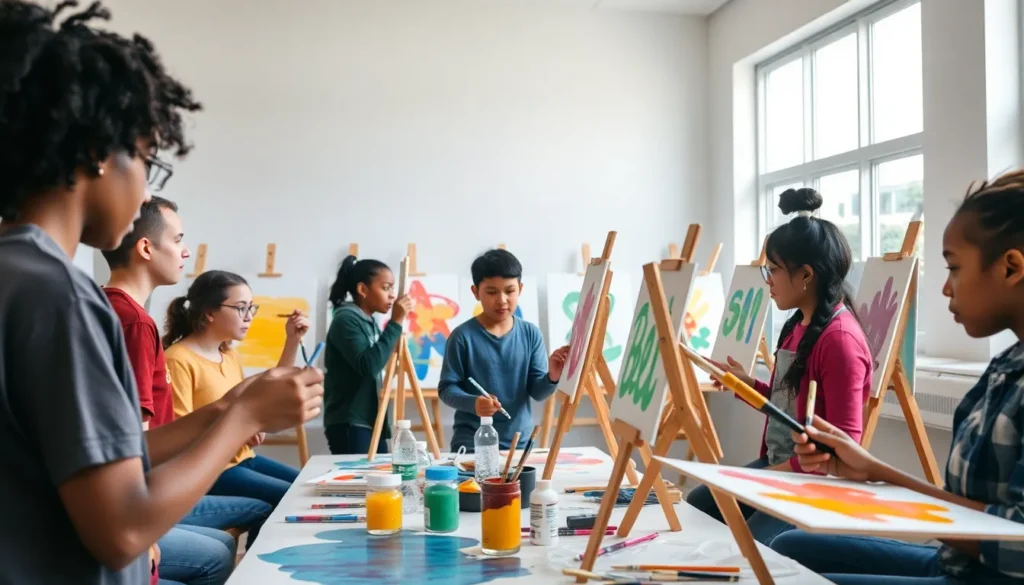
Arts education holds significant value in fostering creativity and innovation among students. Engaging students through artistic expression creates dynamic learning environments that enhance academic performance.
Benefits for Students
Students benefit immensely from arts education initiatives. Improved critical thinking skills often result from participation in visual arts, music, and drama. Enhanced communication abilities can emerge through collaborative projects and performances. Increased self-confidence develops as students showcase their work in exhibitions. Research shows that students involved in arts programs demonstrate higher engagement levels compared to their peers. Academic success tends to follow for students who incorporate arts into their educational experience, reinforcing the idea that creativity and academic performance can coexist.
Impact on Communities
Communities experience positive changes when arts education initiatives thrive. Access to arts programs helps underserved populations cultivate cultural awareness and expression. Collaborations between schools and local arts organizations lead to community events celebrating student achievements. Such partnerships not only enrich educational experiences but also deepen community connections. Funding from government sources and local donations supports these initiatives, driving engagement and pride in shared accomplishments. Monitoring the effectiveness of these programs ensures that arts education continues to transform lives and strengthen communities.
Types of Arts Education Initiatives
Arts education initiatives encompass various programs designed to foster creativity and skill development. These programs can be categorized into in-school programs, after-school programs, and community-based initiatives.
In-School Programs
In-school programs integrate visual arts, music, and performing arts into the standard curriculum. Many schools implement collaborative projects and workshops to actively engage students. Teachers often use innovative strategies to encourage artistic expression across subjects, enhancing critical thinking skills. Research shows that schools with robust in-school arts programs experience higher student engagement. Additionally, these programs nurture creativity, leading to improved academic performance and communication abilities.
After-School Programs
After-school programs offer students opportunities to explore the arts beyond regular classroom hours. Activities in these programs include theater productions, music ensembles, and art clubs. Students benefit from mentorship and hands-on experiences in various artistic disciplines. Participation in after-school arts initiatives often leads to increased self-esteem and teamwork skills. Many local organizations partner with schools to facilitate these enriching opportunities, ensuring access for diverse student populations.
Community-Based Initiatives
Community-based initiatives play a vital role in expanding arts education access to underserved populations. These programs often collaborate with local artists and organizations to deliver workshops and events. Engagement in community arts fosters cultural awareness and pride among participants. Events such as exhibitions and performances allow students to showcase their talents, building connections between schools and communities. Funding from private donations and government grants supports these initiatives, further enriching students’ artistic experiences.
Challenges Facing Arts Education Initiatives
Funding challenges significantly hinder arts education initiatives. Many schools lack adequate budget allocations to support comprehensive arts programs. Resources often become scarce, impacting the availability of supplies and experienced instructors. Without proper funding, creative opportunities diminish for students eager to explore the arts.
Curriculum integration poses another challenge. Schools frequently prioritize core subjects like math and science, leaving little room for arts education. As a result, artistic disciplines often receive limited attention in standard curricula. Teachers face difficulties incorporating arts into lesson plans despite the proven benefits. Engagement decreases when arts are not embedded in broader educational goals. Addressing these integration issues enhances the potential of arts initiatives within educational frameworks.
Successful Case Studies
Several examples highlight the effectiveness of arts education initiatives.
National Examples
Successful arts education programs exist across the United States. Schools like the New York City Arts in Education roundtable emphasize creative integration into curricula. Programs promote music, dance, and visual arts, leading to increased student engagement and improved academic performance. The Kennedy Center’s ArtsEdge provides online resources for educators, enhancing arts instruction in various subjects. Research shows students participating in these programs demonstrate improved critical thinking skills, fostering a well-rounded education. Overall, these national initiatives showcase the transformative power of arts education on student success.
Local Success Stories
Local success stories illustrate the potential of arts education initiatives in communities. In Chicago, the Goodman Theatre’s education program connects students with professional artists, enriching their learning experience. This program has produced notable outcomes; students involved report higher self-esteem and enhanced collaboration skills. Similarly, San Francisco’s Youth Art Exchange promotes arts integration within underserved neighborhoods. Students work on real-world projects, gaining confidence and pride in their artistic abilities. Such local initiatives exemplify how targeted arts education can significantly impact individual growth and community cohesion.
Future of Arts Education Initiatives
The future of arts education initiatives promises growth through innovative practices and supportive policies. Schools are increasingly recognizing the vital role that arts play in holistic student development.
Trends and Innovations
Growing emphasis on interdisciplinary approaches is emerging as a trend. Schools now incorporate science and technology into arts education, fostering creativity and critical thinking. Digital tools enhance learning experiences, allowing students to explore art through virtual platforms. Collaborative projects with local artists and organizations enrich curricula, making learning more relevant. Community art installations also engage students, connecting them with broader cultural contexts. Increased focus on social-emotional learning aligns with arts education, promoting well-being alongside academic achievement. Embracing these innovations keeps education dynamic and responsive to students’ needs.
Policy Recommendations
Advocating for increased funding remains crucial for sustaining arts education initiatives. Policymakers should focus on equitable distribution of resources across all schools, especially underserved areas. Integration of arts into standardized testing can highlight its importance in education. Supporting professional development programs enables teachers to refine their skills in delivering arts education effectively. Collaboration between educational institutions and arts organizations can enhance program effectiveness, creating a more vibrant learning environment. Monitoring and evaluating arts initiatives ensures they meet intended goals and adapt as necessary. These policy recommendations play an essential role in shaping the future of arts education.
Arts education initiatives are vital for nurturing creativity and innovation within students. By integrating arts into the curriculum, schools create dynamic learning environments that enhance critical thinking and communication skills. These programs not only boost academic performance but also foster a sense of community and cultural awareness.
As the landscape of education evolves, the importance of arts education cannot be overstated. Addressing funding challenges and prioritizing arts within educational frameworks will ensure that all students have access to these enriching experiences. The future of arts education lies in its ability to adapt and thrive, ultimately transforming lives and communities for the better.

