

High school arts programs often get overshadowed by sports and academic clubs, but they’re the unsung heroes of a teenager’s education. Imagine a world where creativity isn’t just encouraged but celebrated! From painting masterpieces to belting out show tunes, these programs offer students a chance to express themselves in ways that math equations just can’t compete with.
Overview of High School Arts
High school arts programs hold significant value in a teenager’s education. These programs encourage creative expression and support personal growth.
Importance of Arts Education
Arts education enhances critical thinking skills, improves emotional intelligence, and fosters a sense of community. Engaging in artistic activities enables students to explore their creativity, which leads to increased confidence. Research shows that students involved in arts programs perform better academically compared to their peers not participating in the arts. Participation in the arts cultivates teamwork and discipline, essential qualities for future success. Schools prioritizing arts education contribute to well-rounded individuals equipped for various life challenges.
Types of Arts Programs
High schools offer diverse arts programs that cater to various interests. Visual arts programs include painting, sculpture, and photography, allowing students to express their perspectives. Performing arts programs, such as theater, dance, and music, provide opportunities for collaboration and self-expression. Media arts programs introduce students to film, digital design, and multimedia production. Each program encourages creativity and enriches the educational experience, preparing students for careers in creative fields or enhancing their appreciation for the arts.
Benefits of High School Arts
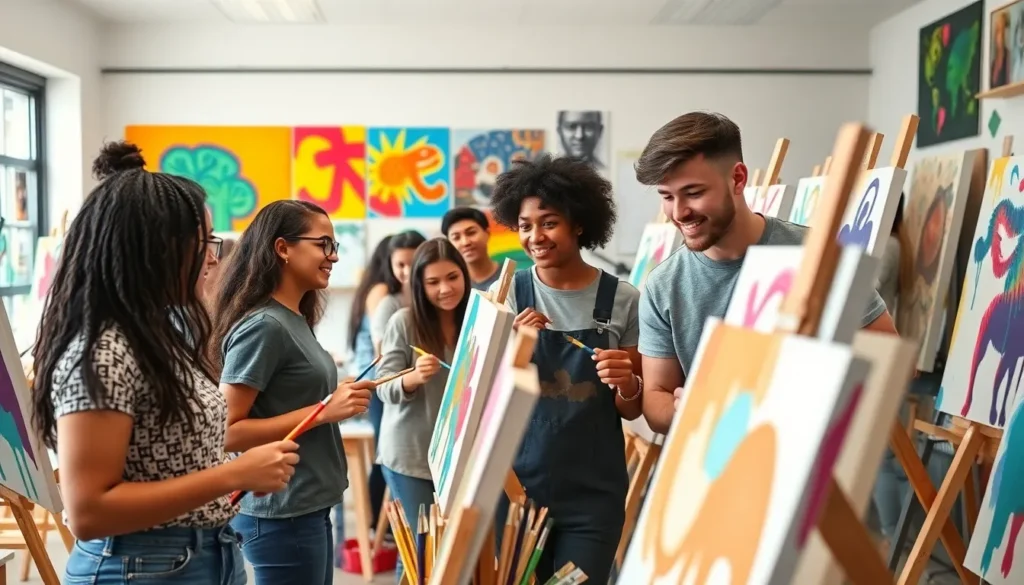
High school arts programs provide numerous benefits, contributing significantly to students’ overall development. Engaging in these programs enhances various skills and fosters personal growth.
Cognitive Development
Cognitive development improves through the practice of arts. Students develop critical thinking skills as they evaluate and create their work. Exposure to different art forms encourages problem-solving abilities, enabling them to think outside the box. Arts education includes visual arts and music, allowing for interdisciplinary learning experiences. Research indicates that students involved in arts programs score higher on standardized tests compared to those focused solely on academics. Additionally, participation in arts nurtures spatial-temporal skills essential for subjects like math and science. Creativity blooms in these environments, leading to innovative thinking that benefits academic performance.
Emotional Expression
Emotional expression finds a voice through high school arts. Students often use artistic mediums to convey feelings and experiences, promoting emotional intelligence. Participating in the arts provides a safe space for self-discovery and reflection. Activities such as painting, acting, and dancing allow individuals to explore complex emotions and themes. Supporting mental health, involvement in the arts reduces stress and anxiety levels among students. Studies show that those engaged in arts programs demonstrate higher levels of self-esteem and resilience. Fostering connections among peers enhances social skills, building a supportive community that further nurtures emotional growth.
Challenges in High School Arts
High school arts programs face several significant challenges that impact their effectiveness and accessibility. These challenges include funding issues and curriculum constraints that hinder students’ creative development.
Funding Issues
Limited funding often plagues high school arts programs. School districts may allocate a disproportionate amount of resources to sports and academic subjects. Competition for funds exists among various programs, leaving arts initiatives underfunded. Budget cuts frequently lead to reduced class hours or the cancellation of programs entirely. Consequently, schools struggle to provide adequate materials and facilities that support artistic endeavors. The lack of financial support stifles opportunities for students to engage meaningfully in the arts, limiting their creative expression.
Curriculum Constraints
Curriculum constraints further complicate high school arts education. Standardized testing pressures schools to prioritize core subjects, often at the expense of the arts. Often, arts courses compete with required academic classes, limiting students’ ability to enroll in desired programs. The rigid structure of traditional curricula prevents flexibility that arts educators require to adapt their teaching methods. Consequently, students may experience an environment where creative exploration takes a backseat to standardized learning. These constraints reduce the perceived value of arts education, hindering students’ overall development and discouraging interest in creative careers.
Success Stories in High School Arts
High school arts programs produce remarkable outcomes, illustrating their importance in education and community engagement.
Notable Alumni
Many successful individuals credit their high school arts education for shaping their careers. For instance, film director Ava DuVernay participated in various visual arts programs during her teenage years. Musicians like Billie Eilish also honed their craft in school settings, utilizing arts courses to develop their talent. Actors such as John Legend emphasize the role high school arts played in fostering their creativity. Students engaging in the arts often find pathways to prestigious institutions, landing roles in film, theater, and music.
Impact on Communities
Arts programs enrich communities by fostering collaboration and cultural appreciation. Schools hosting arts festivals enable students to showcase their talents while bringing families together. Local galleries often feature student artwork, enriching neighborhoods and enhancing school visibility. Engaging in community arts initiatives promotes pride among residents, creating a shared sense of identity. Support for high school arts programs can lead to increased involvement in creative careers, ultimately boosting local economies. Higher participation rates in arts programs correlate with stronger community ties and increased civic engagement.
Future of High School Arts
The future of high school arts programs hinges on evolving trends and necessary advancements. Continued emphasis on the significance of arts education fosters a rich, diverse learning environment.
Trends to Watch
Increased integration of technology in arts education stands out. Digital art, filmmaking, and virtual performance platforms gain traction as they attract student interest. Collaborative projects that involve community partnerships emerge, enhancing accessibility and resources. Online platforms also allow students to showcase their work globally, raising awareness of their talents. Lastly, interdisciplinary approaches combine arts with STEM subjects to create STEAM curricula, bridging gaps and encouraging innovative thinking.
Recommendations for Improvement
Funding allocation for high school arts needs reevaluation. Art programs should receive priority alongside core subjects to ensure robust educational offerings. Schools can establish partnerships with local businesses and art organizations for sponsorship and grants. Increased awareness campaigns regarding the benefits of arts education can enhance community support. Incorporating arts into the overall curriculum fosters a comprehensive approach, emphasizing its role in personal and academic development. Finally, schools should advocate for broader policies that recognize and sustain the importance of arts education within the school system.
High school arts programs are vital for fostering creativity and personal growth in students. They provide essential skills that extend beyond the classroom and into future careers. The benefits of arts education are clear; it enhances cognitive abilities, emotional intelligence, and social connections.
As challenges persist in funding and curriculum focus, advocating for these programs is crucial. Supporting arts initiatives not only enriches student experiences but also strengthens community ties. By prioritizing arts education alongside core subjects, schools can cultivate well-rounded individuals prepared to thrive in diverse fields. Investing in high school arts ensures that future generations continue to benefit from creative expression and innovation.

