

High school music isn’t just about hitting the right notes; it’s a rite of passage, a symphony of awkwardness, and a stage for unforgettable memories. From the first time a shy freshman steps onto the stage to belt out a solo to the chaos of marching band practice, these experiences shape not only musicians but also friendships that last a lifetime.
Imagine the thrill of performing in front of a packed auditorium, where every note played could either earn a standing ovation or a few cringes. It’s a world where creativity flourishes, and students discover their passions while navigating the ups and downs of adolescence. High school music programs offer a unique blend of discipline and fun, proving that even in the most serious of settings, laughter and camaraderie can steal the show.
Overview Of High School Music Programs
High school music programs play a crucial role in shaping student experiences. They provide opportunities for artistic expression, skill development, and social interaction.
Importance Of Music Education
Music education fosters creativity and enhances cognitive abilities in students. Research indicates that engaging in music programs contributes to increased academic performance, with students showing improved math and language skills. Collaborative projects like band and choir rehearsals build teamwork abilities and communication skills. Additionally, music education encourages self-discipline and commitment through consistent practice and performance. Students often develop emotional intelligence as they connect with various musical styles and themes, fostering a deeper understanding of cultural diversity.
Types Of Music Programs Offered
High schools offer diverse music programs to cater to varied interests. Concert bands and orchestras allow students to explore instrumental music, while jazz ensembles focus on improvisation and stylistic nuances. Choirs provide vocal training and opportunities for solo performances, emphasizing harmony and teamwork. Additional options like music theory classes cover fundamental concepts and composition techniques. Some schools even offer specialized courses in music technology, where students learn about recording and production. Each program encourages personal and artistic development, enriching the educational experience.
Benefits Of High School Music Participation
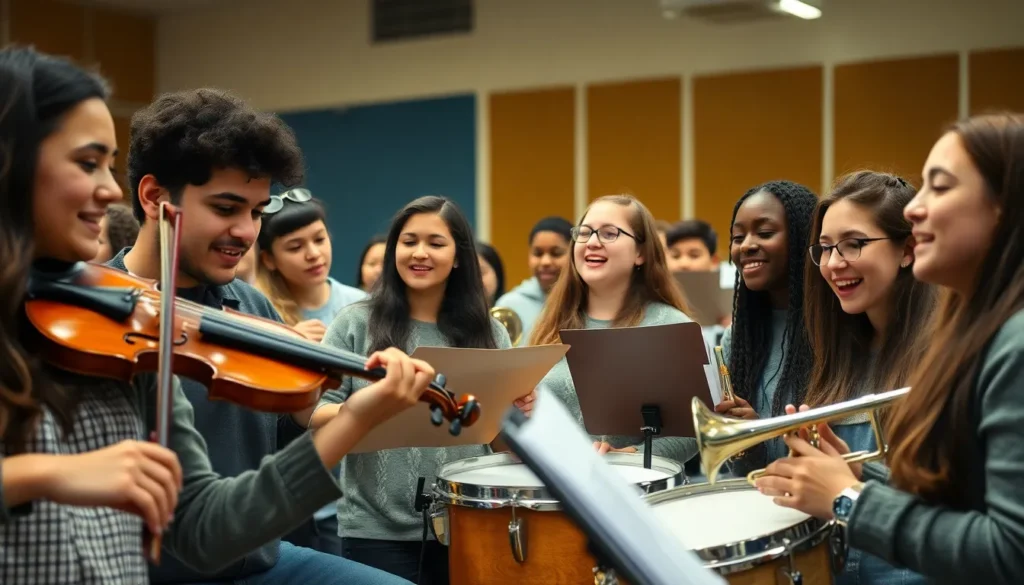
High school music participation offers a range of benefits that enhance students’ overall experiences. The impact extends into academics and social interactions, proving vital to personal development.
Academic Improvement
Participation in music programs boosts academic performance. Research indicates that students involved in music outperform peers in standardized tests in subjects like math and reading. Engaging with music theory sharpens critical thinking and problem-solving skills. Students also develop greater focus during rehearsals and performances, skills that translate directly to the classroom. Higher levels of discipline emerge as students practice regularly and refine their abilities. Stronger cognitive connections form through music, supporting overall brain development. Educational institutions recognize these benefits and often report improved grades among students actively engaged in music.
Social Skills Development
Music education fosters essential social skills among high school students. Collaborating in bands, orchestras, or choirs teaches students how to work towards a common goal. Working with peers enhances communication abilities and encourages teamwork. Relationships formed through group practices often lead to lasting friendships. Participating in performances illustrates the importance of support and encouragement from fellow musicians. Emotional intelligence strengthens as students learn to express feelings through music and understand the emotions of others. High school music programs create a welcoming environment that cultivates empathy and respect for diverse perspectives and backgrounds.
Challenges Faced By High School Music Programs
High school music programs encounter various challenges that impact their effectiveness and sustainability.
Budget Constraints
Budget constraints significantly hinder music programs. Funding often falls short, limiting resources for instruments, sheet music, and essential equipment. Schools frequently prioritize core subjects over the arts, leading to cuts in music funding. As a result, many programs struggle to offer comprehensive musical experiences. This lack of financial support can affect everything from hiring qualified instructors to maintaining instruments. Moreover, students may miss out on enriching opportunities due to lack of funding for travel and performance-related expenses.
Scheduling Conflicts
Scheduling conflicts pose another challenge for music programs. Students often juggle multiple responsibilities, including academics, sports, and part-time jobs. This hectic pace limits their availability for rehearsals and performances. High schools frequently schedule music classes opposite popular electives or sports, leading to decreased participation. The overlap can cause students to choose between their passion for music and other commitments. Additionally, limited rehearsal time can impact the quality of performances, as groups require consistent practice to excel.
Notable High School Music Programs
High school music programs across the country demonstrate exceptional growth, creativity, and dedication. These programs enhance the educational experience while cultivating talent.
Exemplary Public Schools
Public schools such as the School for Creative and Performing Arts in Cincinnati excel in music education. This institution offers a comprehensive program that integrates rigorous academics with extensive music training. Students in the program engage in various ensembles, fostering collaboration and artistic expression. Another standout is the Berklee College of Music’s City Music program in Boston, providing resources and support to high school students. This initiative aims to prepare students for a career in music while emphasizing creativity and innovation.
Innovative Private Institutions
Private institutions like the Interlochen Arts Academy in Michigan attract students globally with their unique music programs. Interlochen features a highly specialized curriculum, encompassing classical, jazz, and contemporary music training. Aspiring musicians benefit from expert instruction and performance opportunities in diverse settings. The Juilliard School also offers an impressive pre-college program that prepares students for professional music careers. Students gain valuable experience performing in prestigious venues, receiving rigorous training that fosters their artistic development.
High school music programs serve as a transformative force in students’ lives. Through shared experiences and creative expression, they foster not only musical talent but also essential life skills. The friendships formed and the confidence gained during these formative years leave a lasting impact.
Despite facing challenges like budget cuts and scheduling conflicts, the value of music education remains undeniable. It enhances academic performance and nurtures personal growth. As students navigate their high school journey, the lessons learned in music programs resonate far beyond the classroom, shaping them into well-rounded individuals ready to face the world. Investing in these programs is crucial for cultivating future generations of musicians and creative thinkers.

