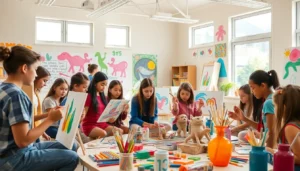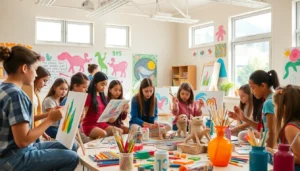


In a world where creativity often takes a backseat to standardized testing, innovative arts pedagogy emerges as a breath of fresh air. It’s like adding a splash of color to a black-and-white movie—suddenly, everything comes alive! This approach not only nurtures artistic skills but also cultivates critical thinking and collaboration among students.
Overview of Innovative Arts Pedagogy
Innovative arts pedagogy transforms the educational landscape by integrating creativity into the learning process. This approach emphasizes experiential learning, allowing students to engage fully through various artistic disciplines. By incorporating visual arts, music, theater, and dance, educators create dynamic environments that stimulate curiosity.
Active engagement fosters critical thinking skills. Students analyze problems and explore multiple solutions in creative contexts. Collaboration becomes a core component, teaching teamwork and communication effectively. Research shows that students participating in arts education perform better academically and socially.
Interdisciplinary connections enrich learning experiences. For instance, integrating art with science can enhance understanding through hands-on projects. Similarly, math skills can be reinforced through rhythm and pattern recognition in music. This method makes learning relevant and applicable to real-world scenarios.
Assessment in innovative arts pedagogy differs from traditional methods. Instead of standardized tests, educators prioritize portfolios and performance-based evaluations. These assessments provide a more holistic view of student progress and creativity.
Innovative arts pedagogy promotes inclusivity and diverse perspectives. It encourages students from various backgrounds to express themselves and share their unique viewpoints. This cultural exchange enriches the classroom environment, fostering empathy and understanding.
As arts pedagogy continues to evolve, technology plays an increasing role. Digital tools provide new avenues for creative expression, making the arts more accessible. Online platforms and multimedia resources expand educational possibilities, engaging students in innovative ways.
Innovative arts pedagogy not only enhances individual learning but also revitalizes school cultures. By nurturing creativity, educators can inspire students, helping them become innovative thinkers and problem solvers.
Key Principles of Innovative Arts Pedagogy
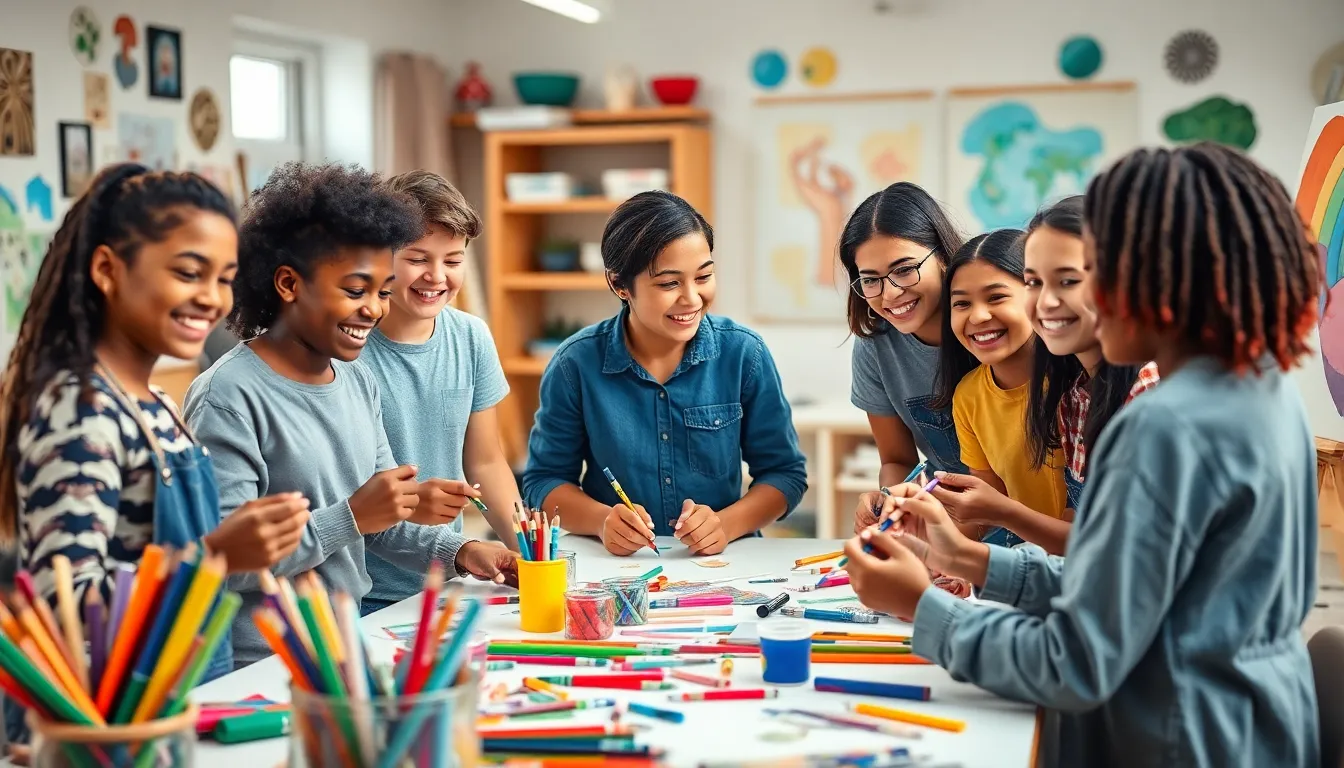
Innovative arts pedagogy hinges on several key principles that enhance educational experiences. These principles focus on nurturing skills essential for the modern world.
Creativity and Expression
Creativity thrives in environments that encourage exploration and experimentation. Students engage with various artistic disciplines, enabling them to express ideas uniquely. Opportunities in visual arts, music, theater, and dance foster imaginative thinking. Enhancing critical thinking skills occurs through challenging artistic projects. Research shows that when students harness their creativity, they develop stronger problem-solving abilities. Moreover, expressive activities lead to increased emotional intelligence, enabling students to connect deeply with their peers.
Collaboration and Community
Collaborative efforts create an inclusive classroom environment. Students working together on artistic projects experience shared learning, leading to a stronger sense of community. Interdisciplinary approaches allow art to merge with subjects like science and math, making learning holistic. Effective communication during collaborative projects enhances social skills and teamwork. Involvement in community arts initiatives cultivates a connection beyond the classroom, instilling a sense of responsibility towards society. Enhanced engagement through teamwork leads to improved academic and social outcomes for all students.
Benefits of Innovative Arts Pedagogy
Innovative arts pedagogy transforms educational experiences by providing numerous benefits. It enhances engagement and critical thinking skills, allowing students to thrive.
Enhanced Student Engagement
Innovative arts pedagogy captivates students’ attention through interactive learning methods. Students participating in creative projects demonstrate increased motivation and enthusiasm. Active involvement in artistic disciplines fosters deeper connections to the material. Research shows that arts education boosts attendance and decreases dropout rates. Creativity-infused learning environments encourage self-expression, creating a more inclusive atmosphere. Engaging in collaborative artistic endeavors fosters teamwork and communication among peers. Overall, innovative arts pedagogy inspires students to express their ideas and share their perspectives.
Development of Critical Thinking Skills
Critical thinking skills flourish within innovative arts pedagogy frameworks. Students encounter complex challenges that require thoughtful solutions during creative projects. Engaging in arts allows students to analyze and interpret various concepts, enhancing their cognitive abilities. Exposure to different artistic viewpoints encourages open-mindedness and reflection. Faculty often observe that students become more adept at evaluating information critically. Problem-solving within artistic contexts helps nurture resilience, paving the way for lifelong learning. Thus, innovative arts pedagogy equips students with essential skills for future success.
Challenges in Implementing Innovative Arts Pedagogy
Implementing innovative arts pedagogy presents several challenges, particularly in resource allocation and educator training. Each of these factors significantly impacts the effectiveness of this educational approach.
Resource Availability
Limited resources inhibit the adoption of innovative arts pedagogy in many schools. Insufficient funding restricts access to materials like art supplies, musical instruments, and technology. Without adequate funding, schools struggle to provide diverse artistic experiences. Some institutions rely on grants or donations, which may not cover all necessary costs. Budget constraints often prioritize core subjects over arts education, reducing opportunities for students. Limited access to community partnerships can further decrease resource availability. Art programs may thrive in well-funded districts, leaving underfunded schools at a disadvantage.
Training Educators
Training educators effectively presents another challenge. Many teachers lack formal training in innovative arts pedagogy, affecting their confidence and ability to implement these methods. Professional development programs often do not emphasize arts integration, leading to gaps in knowledge. In turn, this can result in a reliance on traditional teaching methods. Some educators face resistance to change from established curriculum formats. Exposure to best practices in arts pedagogy proves essential for overcoming these challenges. Collaboration with arts organizations can enhance educators’ skill sets. By prioritizing specialized training, schools can better equip teachers to foster creativity and critical thinking in students.
Case Studies in Innovative Arts Pedagogy
Innovative arts pedagogy has showcased significant success in various educational settings. One prominent example comes from the Boston Arts Academy, where students engage in an integrated arts curriculum emphasizing dance, music, and visual arts. Students participating in this program consistently demonstrate improved academic performance and higher graduation rates, highlighting the strong connection between arts education and overall achievement.
Another compelling case is the FAME (Fine Arts for the Middle School) program in Los Angeles. This initiative combines traditional subjects with arts-focused learning. In this environment, students explore scientific concepts through theater and music, enhancing retention and understanding of complex topics. Results indicate that students enrolled in FAME outperform their peers in standardized tests.
Moreover, the New Jersey Performing Arts Center’s Arts Education program illustrates the impact of community involvement in arts pedagogy. This program engages students from diverse backgrounds, fostering collaboration and inclusion. Participating students report greater self-esteem, creativity, and a sense of belonging, further demonstrating the positive effects of arts education on social skills.
Additionally, the integration of technology in arts pedagogy has gained traction in schools. For instance, a small school in San Francisco utilizes digital media tools for students to create innovative projects that merge art and technology. This approach not only captivates students but also prepares them for the digital landscape of the modern workforce.
Collectively, these case studies underscore the transformative potential of innovative arts pedagogy within education. Increased engagement rates, enhanced creativity, and improved critical thinking skills reflect the effectiveness of integrating arts into learning. Consequently, schools embracing this approach are fostering environments where students thrive academically and socially.
Innovative arts pedagogy stands as a powerful catalyst for change in education. By infusing creativity into the learning process it transforms traditional classrooms into vibrant spaces where students thrive. This approach not only enhances engagement but also cultivates essential skills like critical thinking and collaboration.
As schools navigate the challenges of resource allocation and educator training they must prioritize arts integration. Success stories from various programs illustrate the tangible benefits of this pedagogy. Embracing innovative arts education is crucial for preparing students to face the complexities of the modern world. Ultimately it inspires a generation of innovative thinkers ready to tackle real-world challenges.